As part of International Women in Engineering Day we‘re celebrating some of the ’Minds Behind MASTA’. Read our interview with Dr Caroline Poyser, Software Engineer and Analyst at SMT as she shares more about her role, career journey and the work she is doing now to push MASTA even further ahead.
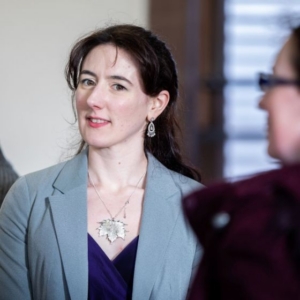
Dr Caroline Poyser, Software Engineer and Analyst, SMT
- What does a typical day look like in your role?
“My day-to-day is usually a mix of coding, working with models in MASTA, debugging, and trying to understand what’s going on and why.
A big part of my time is focused on system analysis, so it’s not just the code side, but also the engineering models behind the code – how systems behave and how we represent that accurately.
I also spend some time reviewing unusual behaviour in customer models that come in through support. That’s actually really useful, because it gives me real insight into how people are using MASTA in practice. You start to see the kinds of problems they’re solving, and sometimes the unexpected ways they’re using the software. It’s quite varied, which I like. I might be coding one day, then reviewing models or doing code reviews the next, it keeps things interesting”
- What first inspired you to pursue engineering?
“I didn’t go through a traditional engineering path, I originally studied physics. But I think the two are quite closely linked. For me, it was always about understanding how things work, breaking things down, analysing them, and figuring out what’s going on underneath.
That led into engineering modelling and software, because you’re essentially doing the same thing, just applying it in a slightly different way. I actually started at SMT in the research team and then moved into software a few years later, so it sort of evolved over time.”
3. What’s the most interesting or rewarding part of your work right now?
“Probably solving problems that we’ve been stuck on for a while. There are definitely times where something just doesn’t make sense, and you think ‘I don’t know why this is happening’. You can spend quite a while working through it. But then, when it finally clicks, and you understand what’s going on – it’s really satisfying. It’s that moment of ‘oh, that’s why’.
I’ve always liked that side of it – the problem solving. It’s not always quick, but that’s part of what makes it interesting.”
- What’s something about your role that might surprise people?
“I think people are surprised by how much variety there is. There’s sometimes an assumption that in roles like this you work on one thing and just keep doing that. But in reality, it changes quite a lot day to day.
You might be coding, then reviewing someone else’s work, then looking at a customer model, then working through a technical problem with someone else on the team.
I quite like that balance. It means you’re not stuck doing one thing all of the time, and you’re constantly learning from different areas.”
- What advice would you give to someone considering a career in engineering?
“I think the main thing would be to stay curious and be willing to try new things. That probably sounds quite generic, but it’s genuinely important. This field doesn’t stay still, things are always evolving. So being open to learning and picking up new skills really helps.
You don’t need to have everything figured out at the start. Just being curious in how things work, and being willing to explore that can take you a long way. And being open to different paths is important too. You might not end up exactly where you expected, but that’s often where the more interesting opportunities are.”
- What skills have been most important in your role?
“I’d say a combination of analysis and perseverance. With the kind of work we do, things don’t always work the first time and that’s normal. Being able to keep trying different approaches and not getting stuck is really important.
At the same time, it’s about being able to step back and think properly about the problem, and sometimes that means sitting down with pen and paper and working through the maths.
So, it’s that balance of thinking things through carefully but also being persistent enough to keep going when something isn’t working how you’d hoped. That’s probably the most important combination.”
- What are you currently working on?
“I’m currently working on a new method for connecting bearings to finite element (FE) models, which is quite exciting. At the moment, the way this is typically done involves using a node at each element of the bearing. This introduces limitations when we are modelling the behaviour of the model at different time steps where the elements will have rotated.
What I’m working on developing is an interpolation-based method that allows for more realistic representation, including the ability to account for rotation properly as the system changes. This will allow customers to replace both rings of their bearing with FE using a flexible connection in advanced system deflection.
It means we can model things like bearing rings distorting out of round both sides of the bearing accurately, which is a big step forward in terms of real-world usage. It’s one of those changes that might sit behind the scenes, but it has a real impact on what engineers can simulate and how confident they can be in the results.”