As part of International Women in Engineering Day we‘re celebrating some of the ’Minds Behind MASTA’. Read our interview with Dr Giulia Ventagli, Research Engineer – AI Specialist at SMT, as she shares more about her role, career journey and the work she is doing now to push MASTA even further ahead.
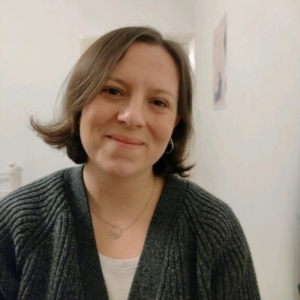
Dr Giulia Ventagli Research Engineer – AI Specialist, SMT
1. What does a typical day look like in your role?
“My usual day is split between research and implementation. In the mornings, we usually have a team meeting to share what everyone is working on and set priorities for the day. After that, I tend to divide my time between two main areas. On one side, I’m doing research, working in Python to test machine learning models and exploring new techniques that we might be able to use in MASTA in the future. On the other side, I’m working in C#, actually implementing ideas into the software itself. So, it’s not just theory, we’re taking something we’ve tested and turning it into a real feature inside MASTA.
Then I also get involved working on research papers and explaining what we’re doing, particularly around how we’re applying machine learning. It’s a really varied role, which I enjoy.”
2. What first inspired you to pursue engineering?
“My path into engineering wasn’t a traditional one. I actually came from a background in theoretical physics and academia. One of the reasons I wanted to move into industry was because I was looking for something more practical. In academia, you can spend a lot of time working on theory without always seeing a tangible outcome. What attracted me to engineering was the opportunity to actually see the results of your work, to know that something you’ve developed will have a real-world impact.
Becoming an engineer wasn’t necessarily planned, but it felt like a natural progression once I realised I wanted to apply my knowledge in a more practical way. I’m still learning a lot, especially coming from a different background, but that’s part of what makes it exciting.”
3. What’s the most interesting or rewarding part of your work right now?
“For me, it’s seeing something go from an idea into an actual feature inside MASTA. You might test something in Python and prove that it works in theory, but then there’s another step where you implement it properly in C# and integrate it into the software. When you open MASTA and see that feature there, working as expected, that’s a really rewarding moment. It makes you think – ‘I did that’.
It’s satisfying, not just because it works, but because going from concept to creation to implementation isn’t always straightforward. So seeing it come together is really exciting.”
4. What’s something about your role that might surprise people?
“I think people might be surprised by what working in AI actually looks like day to day. There’s often an assumption that it’s about using tools like ChatGPT or interacting with AI systems. It’s actually less about ‘using AI’ and more about building and validating the AI from the ground up. In reality, it’s much closer to traditional software development. It involves a lot of writing code, collecting and preparing data and repeatedly testing models. There’s a lot of experimentation and iteration involved, which people might not expect.”
5. What advice would you give to someone considering a career in engineering?
“This advice is specifically for those considering switching careers to engineering like I did. I’d say don’t be afraid to take the step, even if your background isn’t traditionally engineering. Moving into a new field can feel intimidating, especially if it’s different from what you’ve studied or done before, but that challenge is also what makes it rewarding.
For me, it was about wanting something more practical and being willing to try something new. I’d also say that the environment that you work in really matters. Engineering is still a male-dominated field, but finding a company where you feel comfortable and supported makes a huge difference. If you can find that kind of environment, it’s a great place to build your career.”
6. What skills have been most important in your role?
“Coding is definitely a big one – most of what I do involves programming, whether that’s in Python for research or C# for implementation.
But alongside that, I’d say logical thinking is just as important. A lot of my work involves analysing problems, testing different approaches and ruling out what doesn’t work. Being able to think logically helps you focus your effort in the right places and avoid going down paths that won’t lead to meaningful results. The combination of coding and logical thinking is probably the most important skillset.”
7. What are you currently working on that excites you?
“One of the things I’ve worked on recently is using image recognition techniques to evaluate gear contact patches. The idea was to integrate this into our machine learning micro geometry optimiser, so it can automatically assess whether a design ‘looks good’ from a practical engineering perspective. Almost like having another engineer or an assistant reviewing the results to filter down to the best possible options. That means we can bring judgement calls directly into the optimisation process, rather than needing someone to manually review each result.
It’s a really exciting step, because it makes the optimisation both more efficient and more aligned with real-world engineering judgement. And it’s also something that hasn’t really been done before, so it’s been great to be part of developing it.”