High Performance Computing (HPC)
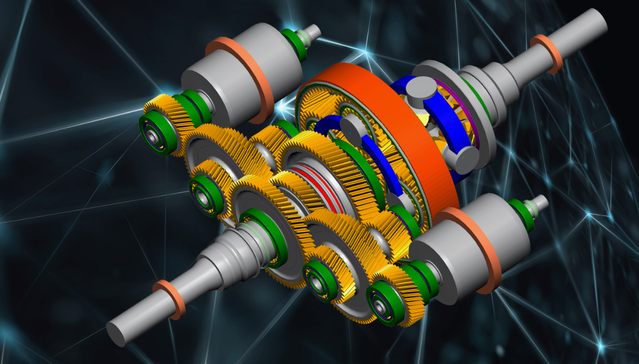
With MASTA 16 you can now run simulations across multiple machines or remote compute environments, rather than relying on a single workstation. Previously, engineers were limited by local hardware performance, long simulation times and the need to run jobs overnight or sequentially. This often meant manually distributing workloads or limiting the number of design cases analysed.
With HPC in MASTA 16, engineers can now run multiple simulations in parallel, explore more design variations in the same timeframe and significantly reduce turnaround time for complex studies. A win-win for engineers, they now have the choice of either faster results or more thorough exploration and better designs, often both.
HPC isn’t just about speed, it fundamentally changes how many design options engineers can consider before making decisions. HPC acts as an accelerator for everything else in MASTA.
MASTA CLI (Command Line Interface)
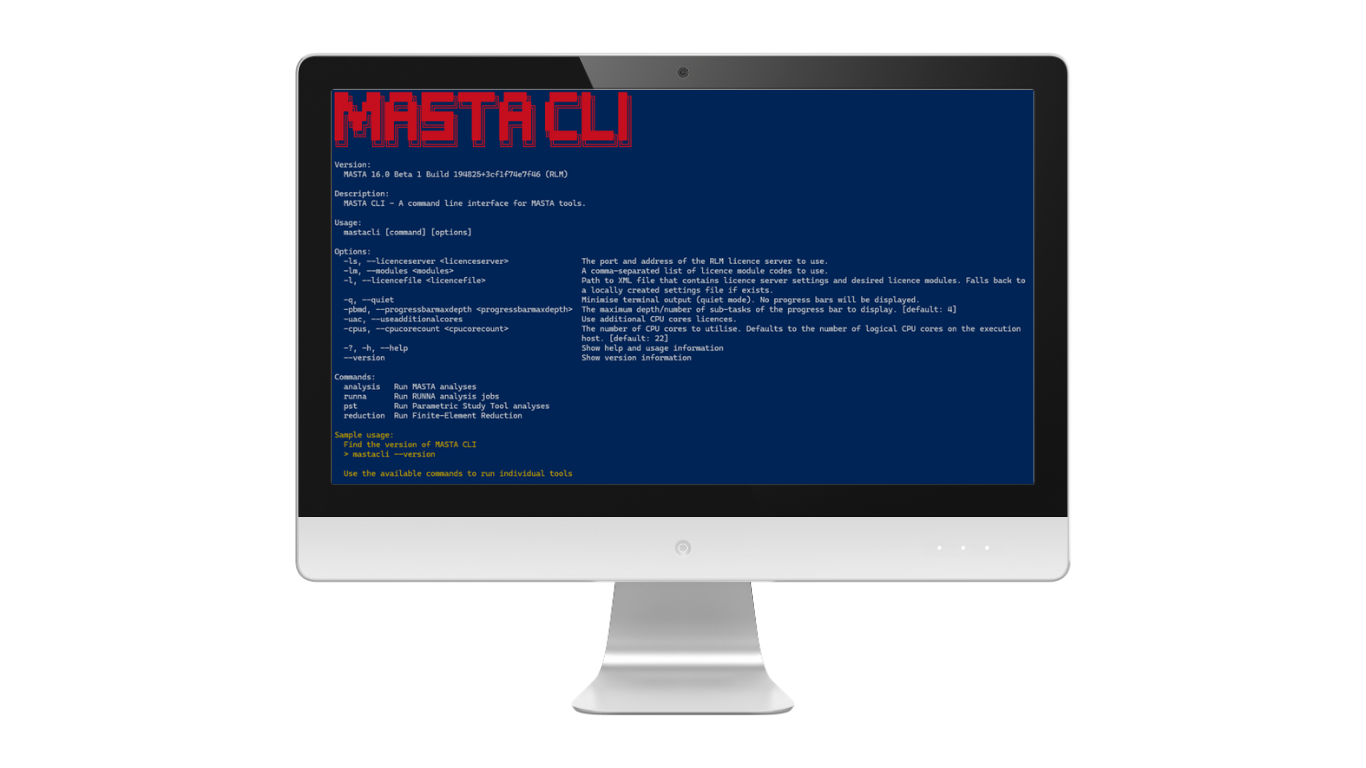
With MASTA CLI you can now run MASTA analyses externally, either on remote systems or as part of automated workflows.
Previously, simulations were tied to the MASTA interface and running jobs externally required additional effort. With MASTA 16 analyses can be executed on remote machines, on shared compute environments or as part of automated pipelines.
MASTA CLI lets engineers offload heavy simulations from laptops to high-spec machines, to integrate MASTA into existing engineering pipelines easier and to automate repetitive simulation tasks.
Debugger for Python Script Editor
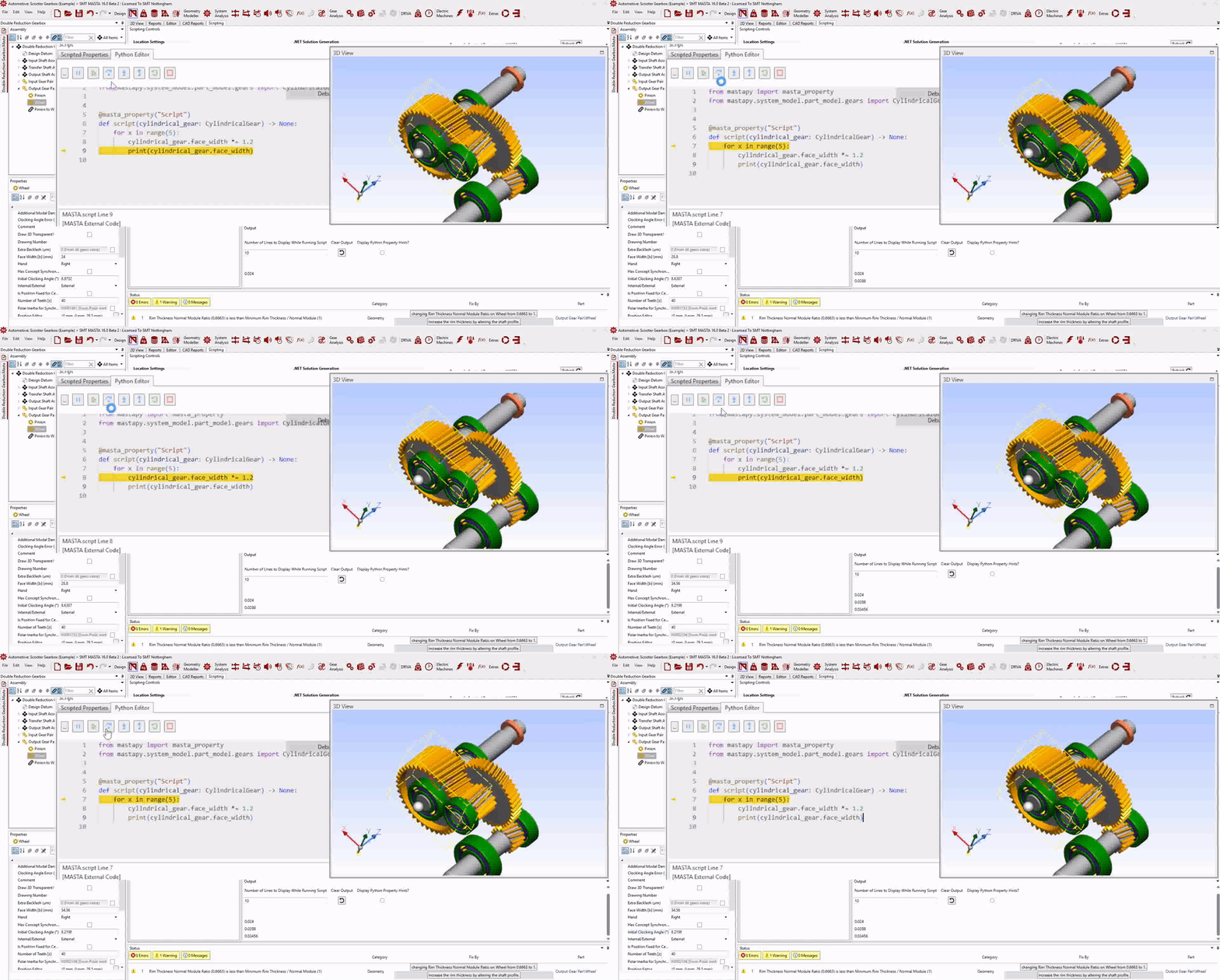
With our Python Script Editor engineers can now develop, run, and debug automation scripts directly within MASTA 16, without any external tools.
Previously, debugging sometimes felt complex and time-consuming, often requiring external environments and users often relied on trial and error or our support team to assist. Now scripting is fully integrated so users can step through code line-by-line so variables and behaviour can be inspected in real time.
With the script editor debugger engineers get faster script development, easier troubleshooting, can solve problems themselves more quickly as well as building more advanced workflows with the ability to iterate without friction. The addition of an inbuilt debugger will bring major improvements for anyone using automation in their daily workflow.
Acoustics Upscaling Using AI
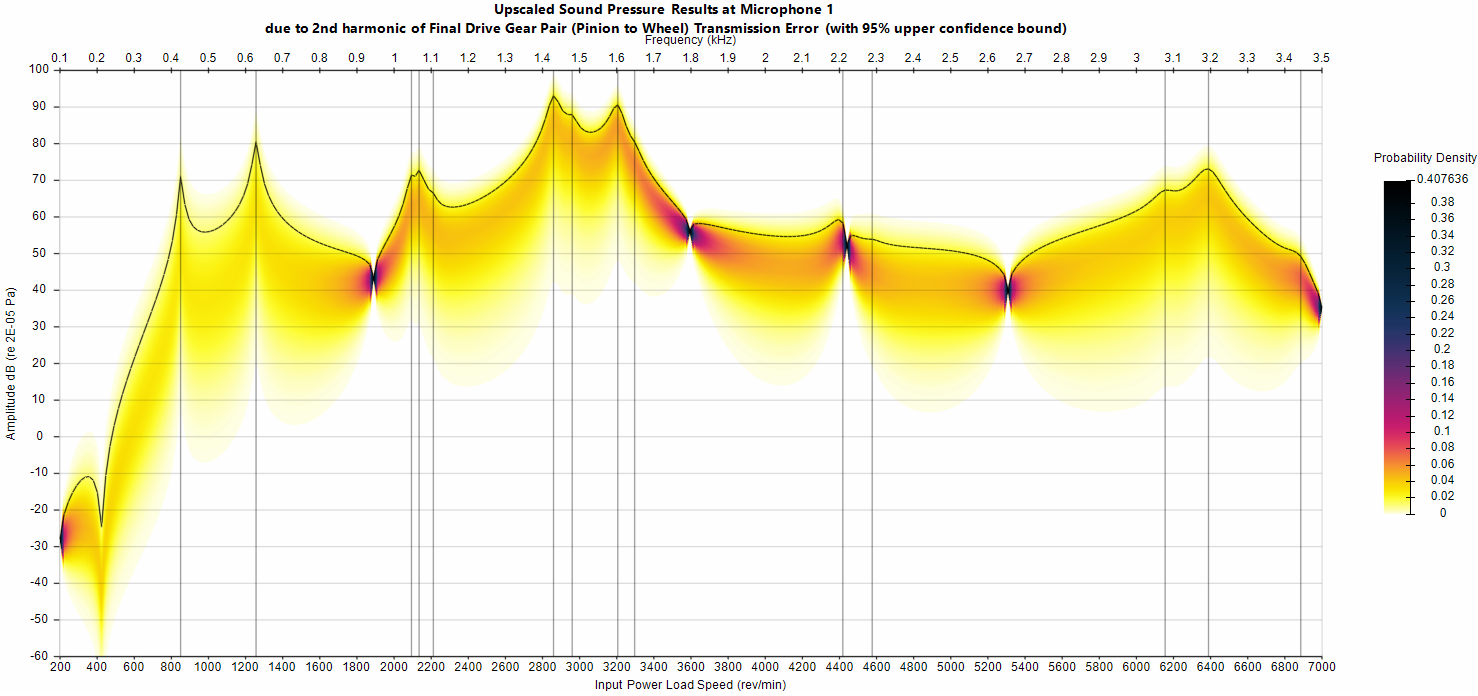
MASTA 16 doesn’t just provide predictions, it assesses how confident you should be in them. Our Acoustics Upscaling in MASTA 16 predicts acoustic behaviour more efficiently by contextualising high fidelity analyses with readily available NVH results.
While full acoustic analysis provides the most accurate representation of NVH behaviour, it can be computationally expensive to run and time prohibitive – often taking hours to days per run. This makes it impractical for responsive design iteration, optimisation and early-stage decision-making.
Acoustics Upscaling in MASTA 16 identifies key noise frequencies early allowing the engineer to focus further analysis only where it matters. This means reduced simulation times, the ability to run shorter analyses to refine only critical areas, so engineers can quickly compare multiple concepts such as casing options and can eliminate poor options early. Instead of waiting days for full results, engineers can make decisions in minutes to hours.
MASTA 16’s approach combines multiple levels of analysis with probabilistic machine learning, meaning results include confidence bounds, not just single outputs. This gives engineers visibility into what is known as well as what is uncertain so they can make the best decisions – AI cannot replace engineering judgement.
Machine Learning Micro Geometry Optimiser Enhancements
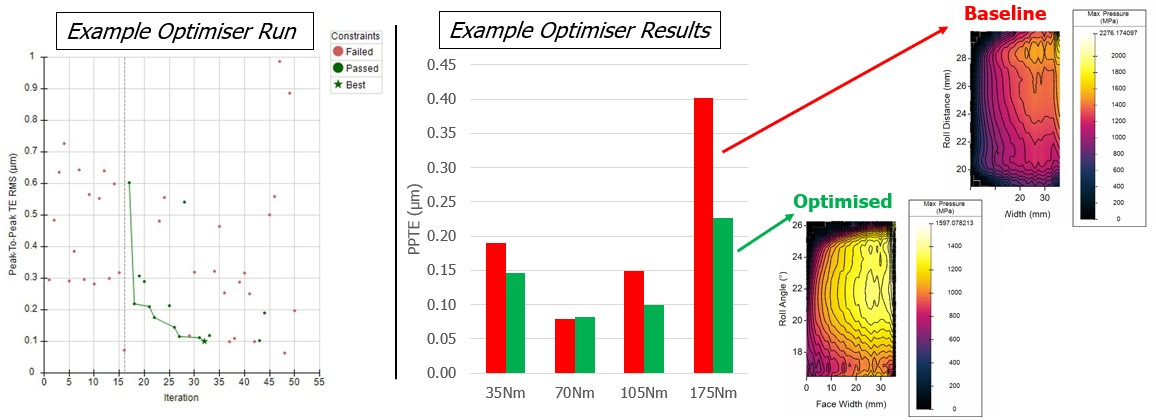
The Micro Geometry Optimiser introduced in MASTA 15 has been significantly upgraded in MASTA 16, making it faster, more robust, and more aligned with real-world engineering decision-making. The Machine Learning Micro Geometry Optimiser acts as an assistant, enabling faster exploration and allowing engineers to focus on decision making and trade-offs.
Traditional optimisation approaches often rely on local optimisation and engineers risk getting stuck in ‘good enough’ solutions which require significant setup, scripting, or third-party tools to run.
MASTA’s Machine Learning Micro Geometry Optimiser is fully integrated and requires minimal setup. It achieves engineer-level optimisation results in minutes rather than hours or days, removing the need for custom scripting workflows or third-party optimisation tools. It allows engineers to scale optimisation across multiple designs and effectively automates the ‘trial and refinement’ process traditionally carried out by experienced engineers.
What’s fundamentally different in MASTA 16’s Optimiser? – AI Contact Patch Constraints
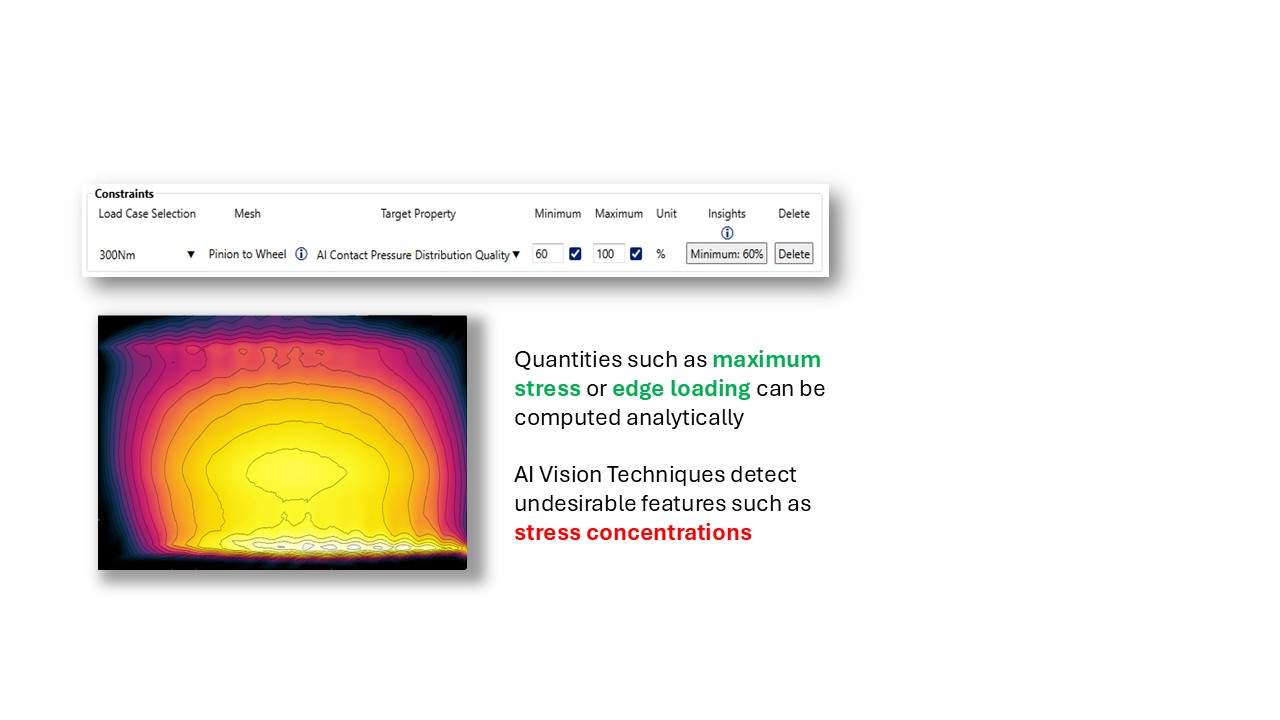
Our Machine Learning Micro Geometry Optimiser uses AI powered image-based recognition to evaluate the quality of gear contact patches during optimisation. Instead of optimising only for numbers, the system now optimises for what looks like ‘good design’ when it comes to contact patches.
Previously, engineers had a limited toolset to ensure a good contact patch; constraining the maximum stress and amount of edge loading filtered some, but not all, of the bad contact patches. This meant engineers often had to manually filter good versus bad contact patches. MASTA 16’s contact patch AI can be instructed to be more or less strict to automatically guide the optimiser away from unacceptable contact patches, making the whole micro geometry optimisation process more automated.
ML Micro Geometry Optimiser works as an engineering assistant to automatically filter out unrealistic and non-viable designs, allowing the engineer to review only the best possible options, rather manually reviewing large optimisation runs.
What’s fundamentally different in MASTA 16’s Optimiser? – Two-Target Pareto Front Optimisation
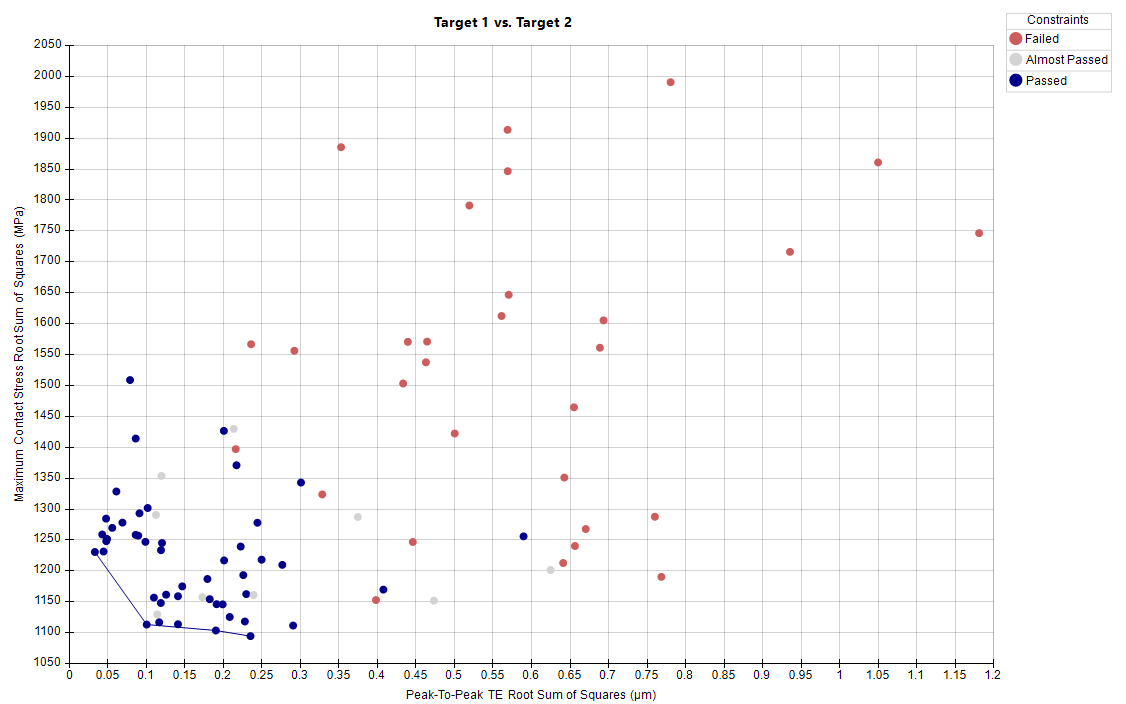
Our Two-Target Pareto Front Optimisation simultaneously optimises for multiple competing objectives, for example noise and durability.
In reality, engineering decisions are always trade-offs – improving one metric often at the expense of another. Previously optimisation targeted a single goal, and engineers had to iterate manually to explore trade-offs. With MASTA 16 engineers can generate a range of Pareto optimal solutions, not just one. They can visualise the full trade-off space and select the best design based on application needs. This suddenly helps engineers move from finding the best solution to a single challenge, to choosing the most suitable compromise for best overall performance.
What’s fundamentally different in MASTA 16’s Optimiser? – System Deflection Surrogate Model
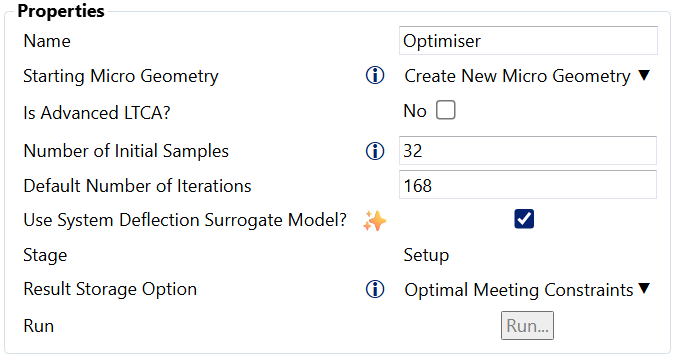
The System Deflection Surrogate Model within MASTA 16’s ML Optimiser uses machine learning to automatically replicate part of the system-level analysis within the context of micro geometry optimisation, removing the need to run calculations every time.
Previously, high-fidelity micro geometry optimisation required re-running system level deflection analyses for every change in micro geometry. Not only were these analyses computationally expensive, they were a major driver of runtime. With our new system deflection surrogate model, MASTA 16’ ML Micro Geometry Optimiser significantly reduces optimisation time. In practice optimisation loops can be 2–3x faster, with the greatest speed-ups expected in larger MASTA models.
More Accurate Data & High-Fidelity Analyses
As powertrain systems become lighter, faster and more complex, the margin for error in simulation continues to reduce. MASTA 16 enables engineers to model powertrain systems more realistically – capturing the effects that matter most and giving greater confidence in simulation-led design decisions.
Even the smallest assumptions impact behaviour, influence durability outcomes and are leading to discrepancies between simulation and test. MASTA 16 includes the highest levels of fidelity by improving how physical behaviour is represented in simulations, reducing simplifying assumptions and enabling higher-fidelity modelling within practical workflows. The result is not just more detailed analysis in MASTA 16, but greater confidence in using simulations to make decisions earlier in development.
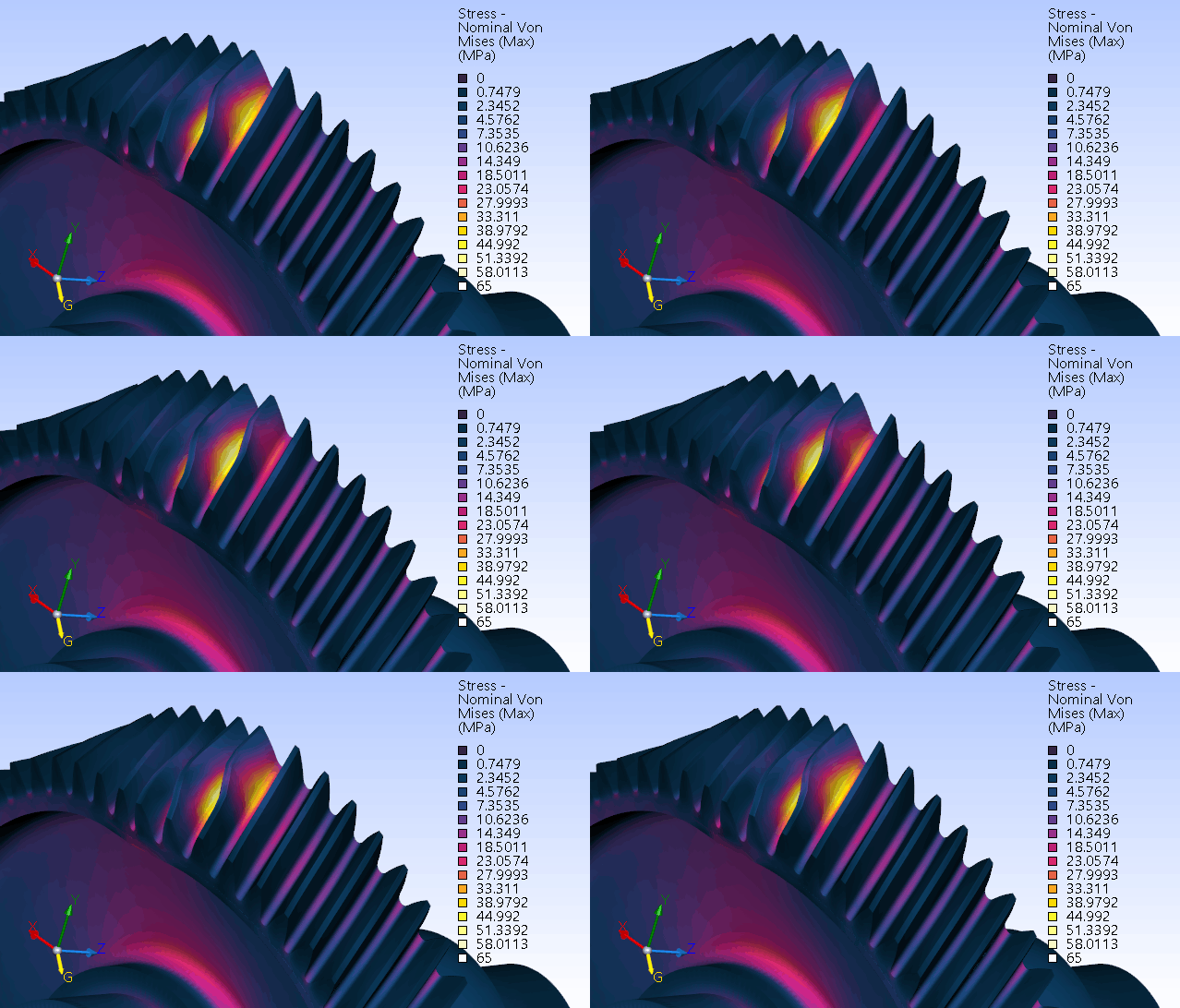
Flexible Gear Blank Advanced LTCA – High-Fidelity Gear Analysis
MASTA already includes a state-of-the-art Loaded Tooth Contact Analysis (LTCA) with our advanced LTCA calculation as standard. However, with thin-rimmed or lightweight gears, tighter coupling between the tooth contact analysis and system model is necessary for the most accurate simulations.
With MASTA 16, a single finite element (FE) model is used for the gear blank and the tooth contact, removing these previous limitations. The result is higher accuracy for gear stresses and transmission error, which are key design targets for engineers. This will be particularly valuable for high-performance applications, lightweight designs and EV powertrains.
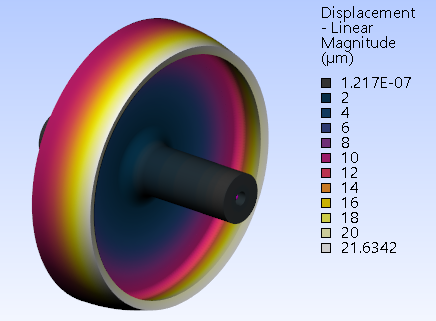
FE Centrifugal Effects
FE Centrifugal Effects allow deformation caused by high rotational speed to be directly accounted for within finite element-based analyses.
We know that in high-speed systems, components expand and deform under rotation, impacting alignment, load sharing, and contact – this is particularly common for lightweight high-speed applications. Often creating a disconnect between modelled behaviour and real operating conditions.
MASTA 16 now includes more realistic representations of operating conditions for much improved predictions of misalignments, contact conditions and overall system response. Our FE Centrifugal Effects reduces the risk of unexpected behaviour during testing and fewer redesign cycles.
Meshed Bearing Rings
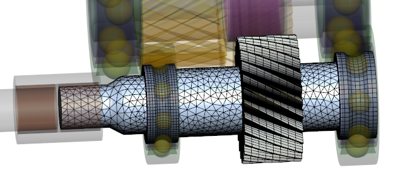
Meshed Bearing Rings in MASTA 16 brings detailed bearing behaviour into everyday workflows. Previously, bearing ring meshes had to be created externally and then reworked when geometry changed, making high fidelity modelling time consuming and not ideal for iterative design.
FE meshes are now generated directly within the workflow and geometry changes can be handled without restarting the process. Meshes can be updated simply with design changes and bearing behaviour is represented with much greater practical realism. MASTA 16 allows engineers to setup models faster, reduce manual effort and increase consistency between models.
Bearing Rings – Continuous Flexible Interpolation
MASTA 16 includes a more advanced method for representing bearing ring deformation, including non-uniform and out-of-round behaviour. In practice real bearing behaviour is not perfectly circular and influenced by system loads and deformation over time.
Traditional methods only approximate this behaviour at discrete points which does not allow for component rotations to be properly captured. With MASTA 16 engineers can see more accurate representation of deformation and load distribution, giving much improved modelling of large systems and flexible structures – essential for those applications where structural flexibility drives behaviour.
Updated SKF & NSK Bearing Catalogues
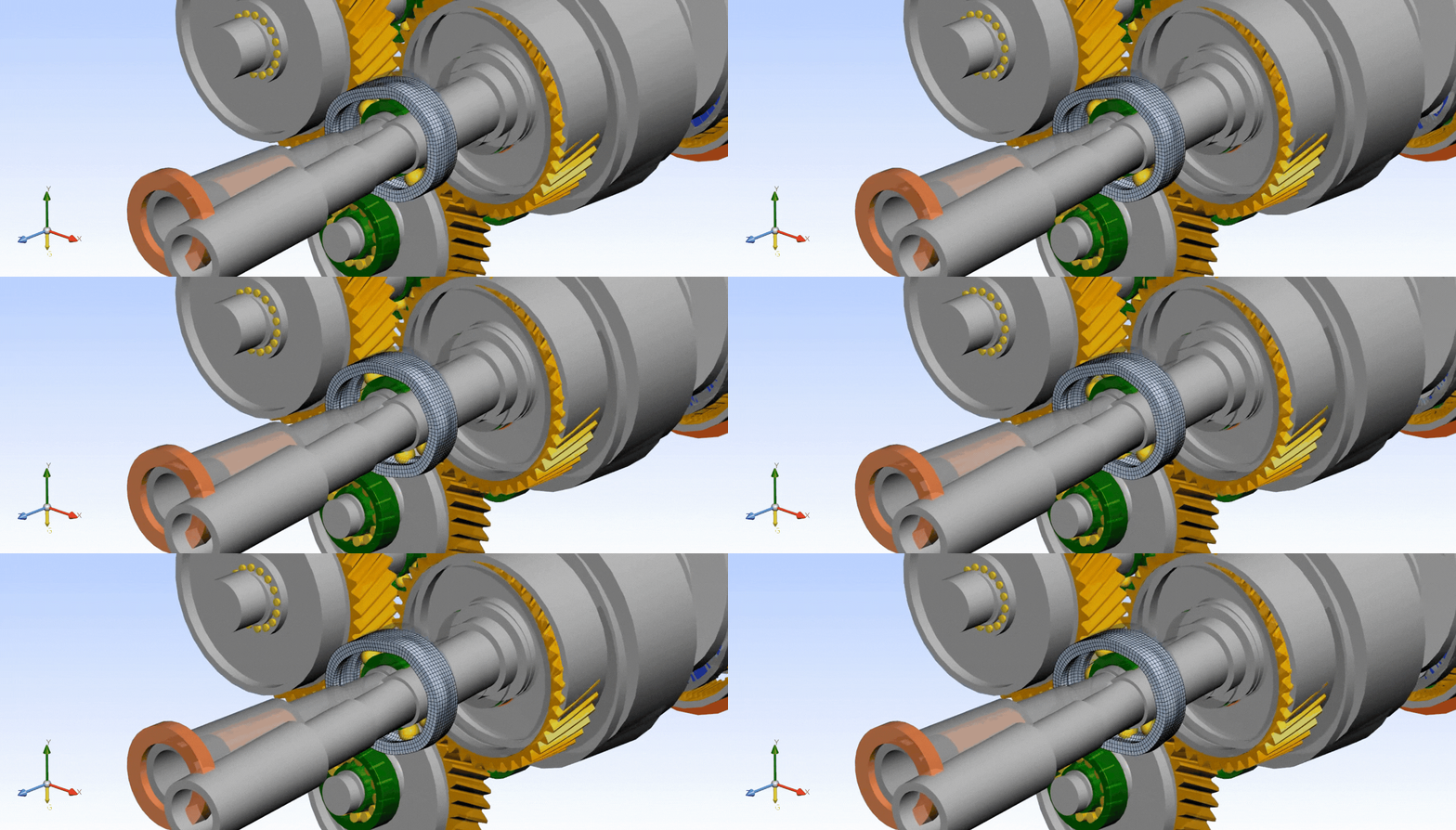
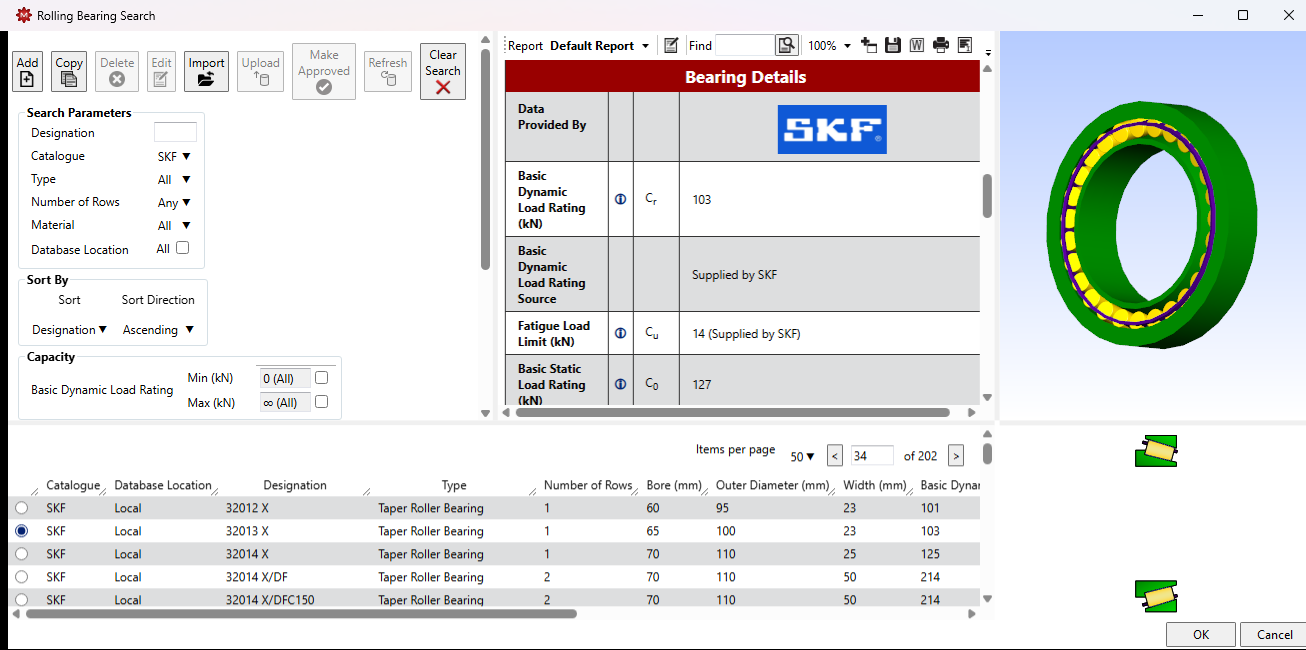
As standard in each release of MASTA, MASTA 16 comes with direct access to the latest manufacturer data.
Accurate simulations depend on accurate component data. Our updated bearings catalogues ensure continued alignment with real-world products and the reduced need for manual data input. Having access to the latest manufacturing data from within MASTA allows engineers to enjoy faster model creation, greater confidence in results and removes the risk of relying on outdated assumptions. While less visible than some of the enhancements in MASTA 16, this underpins accuracy across all analyses.
Expanding Electric Machine Capabilities
The challenge is no longer just modelling electric machines, it’s integrating them effectively into the wider system and enabling engineers to work faster, with greater confidence. MASTA 16 removes barriers between mechanical and electromagnetic workflows, improves realism in simulation, and expands the range of machines and scenarios that engineers can now model, enabling engineers to move faster and make better decisions earlier in development.
Parametric Study Tool (PST) for Electric Machines
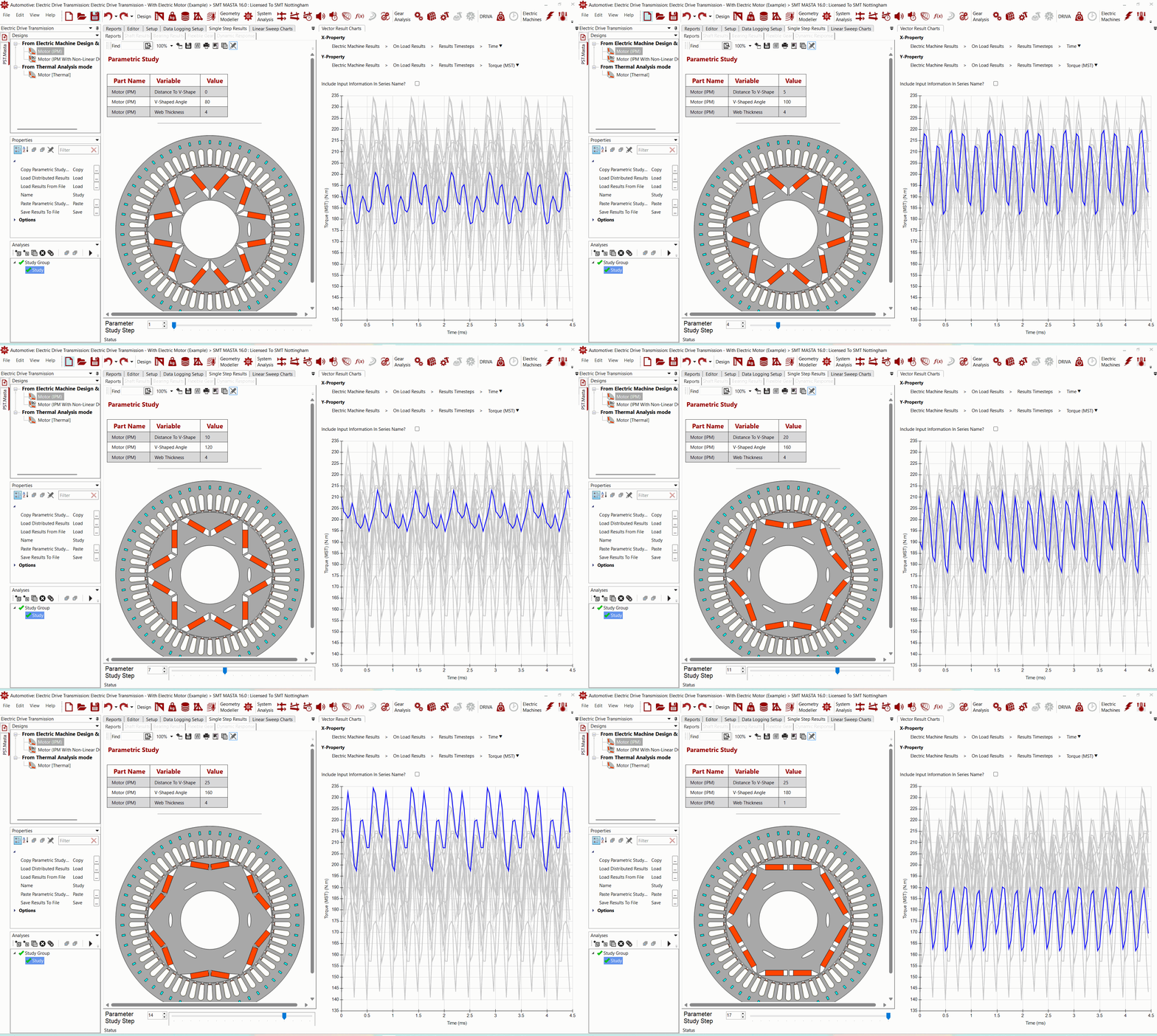
The Parametric Study Tool (PST) for Electric Machines in MASTA 16 allows engineers to run design studies directly on electric machines from within MASTA, varying inputs and assessing their impact on performance.
Previously, engineers often relied on custom scripting to run parameter studies, adding complexity and often requiring additional expertise. With MASTA 16 results are automatically visualised with charts and outputs and engineers can quickly explore how changes in geometry, materials and operating conditions affect torque, efficiency and performance. They can iterate designs without writing code and make faster, more informed decisions. PST for electric machines removes the friction in the workflow and makes advanced studies accessible to more users.
Surface Permanent Magnet (SPM) Machine Modelling
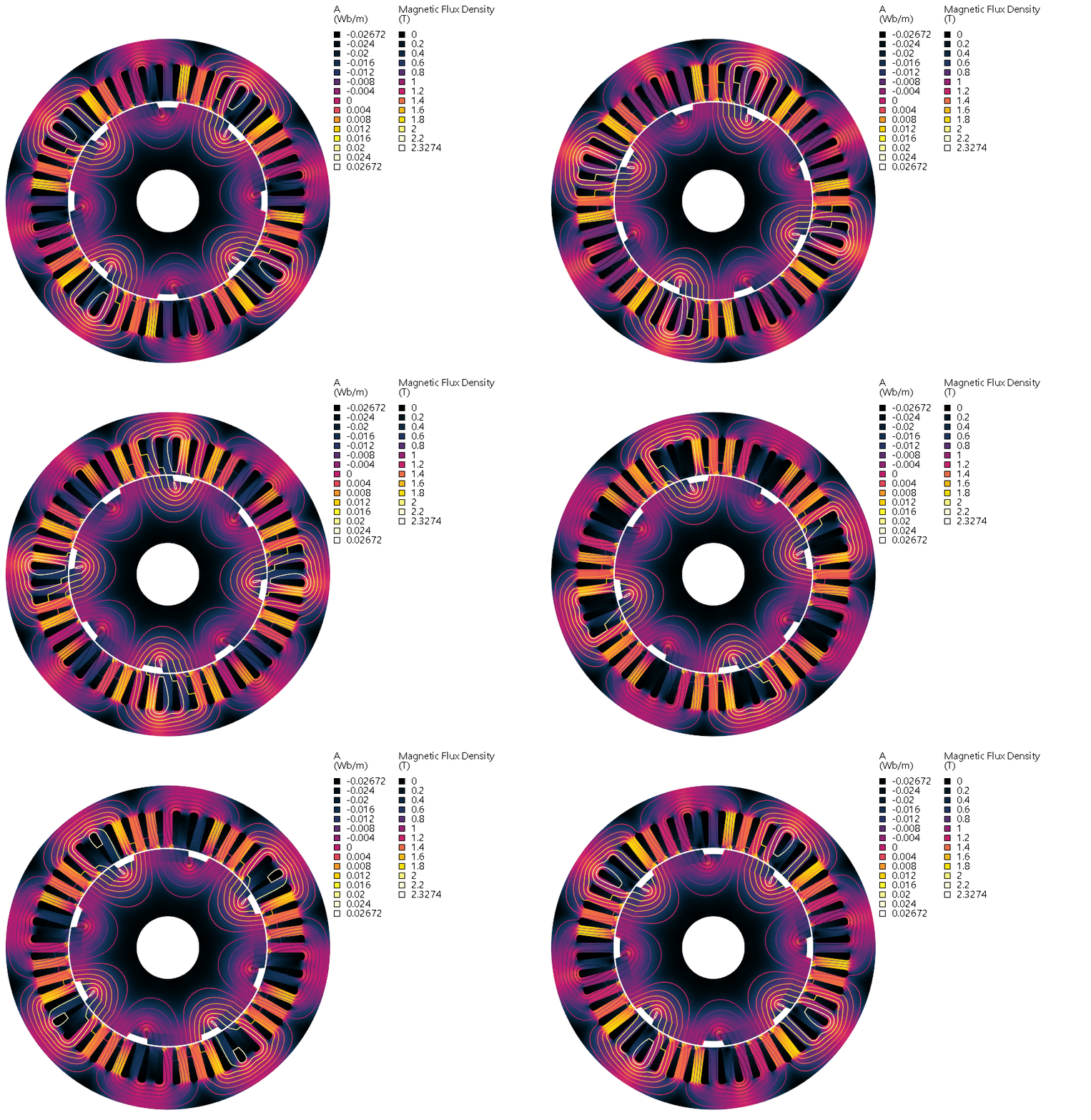
MASTA 16 now supports a new class of electric machine where magnets are mounted on the rotor surface. This expands the range of electric machines that can be analysed in MASTA, supports applications beyond traditional automotive, including high-speed systems and aerospace.
Engineers can now model and analyse more machine types within a single environment and avoid switching between tools for different machine architectures. This is a key step toward broader electric machine capability within MASTA and our long-term platform expansion.
Demagnetisation Analysis
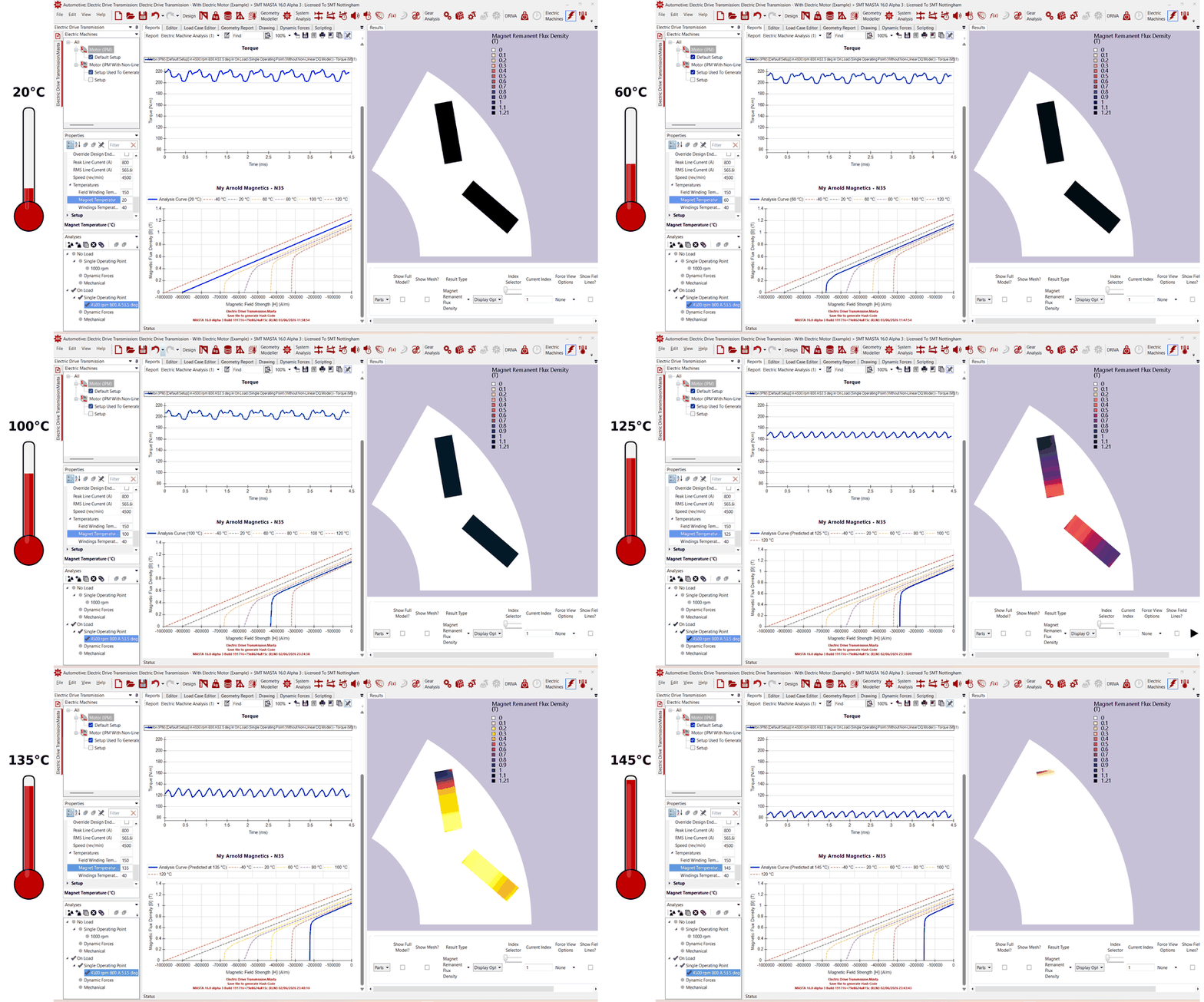
Demagnetisation Analysis allows engineers to quickly evaluate whether an electric machine design is at risk of losing magnetic strength under real operating conditions. In reality high temperatures or currents can weaken magnets over time, leading to reduced torque and underperformance. This risk is often not easily assessed. In MASTA 16 engineers can test operating points to ensure designs remain valid, avoiding designs that fail to meet performance targets in operation and avoiding costly redesigns when systems underperform. This shifts validation to much earlier in the design process, reducing downstream risk and improving confidence that a design will deliver expected torque.
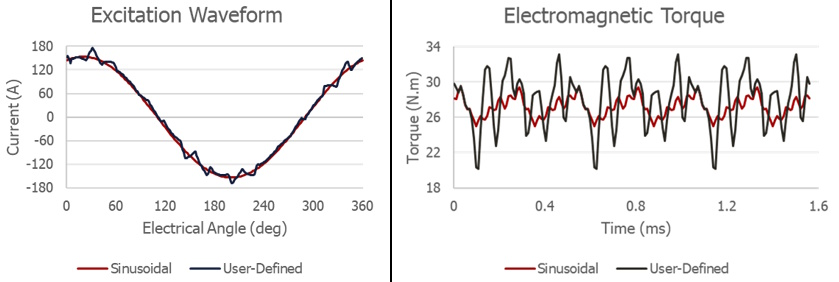
General Current Input (Real-World Excitation)
MASTA 16 allows real measured / simulated current waveforms as well as idealised sine waves to drive electric machine simulations. We all know that in practice electric machines are not driven by perfect signals – real currents include distortion and ripples from inverter behaviour. In MASTA 16 engineers can input real-world test data and create a more accurate representation of actual operating conditions. This gives a much better prediction of real-world performance, and coupled with MASTA harmonic analysis, vibration and noise characteristics, it moves simulations away from ‘perfect lab conditions’ and closer to what happens in reality.